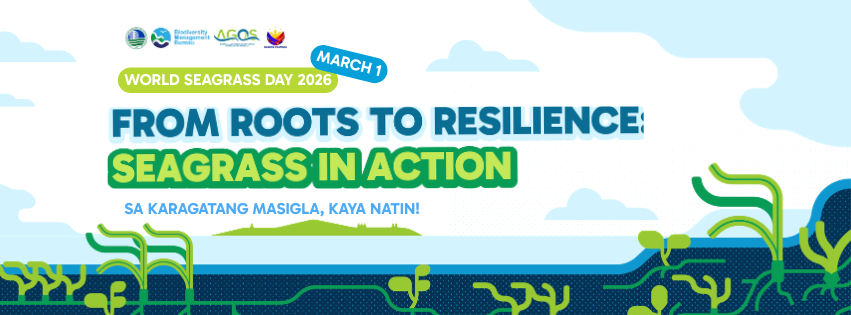
In celebration of the CY 2026 World Seagrass Day, the Coastal Resources and Foreshore Management Section (CRFMS) under the Conservation and Development Division of DENR Region 10 conducted a two-day Orientation on Seagrass Watch Monitoring on March 2–3, 2026 at the Initao-Libertad Protected Landscape and Seascape (ILPLS) in Tubigan, Initao, Misamis Oriental. Anchored on the theme “From Roots to Resilience: Seagrass in Action,” the activity was aligned with the Ocean Decade Challenge 6, which emphasizes strengthening community resilience to ocean hazards through informed decision-making and community-based conservation efforts.
The activity aimed to capacitate CRFMS personnel and field office staff from PENRO Misamis Oriental, CENRO Gingoog, CENRO Initao, and ILPLS-PAMO in the application of standardized seagrass monitoring protocols. It also sought to validate the seagrass baseline data from NAMRIA (2020) and assess existing issues affecting seagrass conditions in the area. A total of 17 participants (11 male and 6 female) attended the activity.
The first day focused on lectures and discussions held at the ILPLS Office. The program formally opened with an invocation and the singing of the Philippine National Anthem, followed by the acknowledgment of participants. A welcome address was delivered by CENR Officer Jerome G. Pioquinto, who expressed optimism about the collaborative outcomes of the activity.
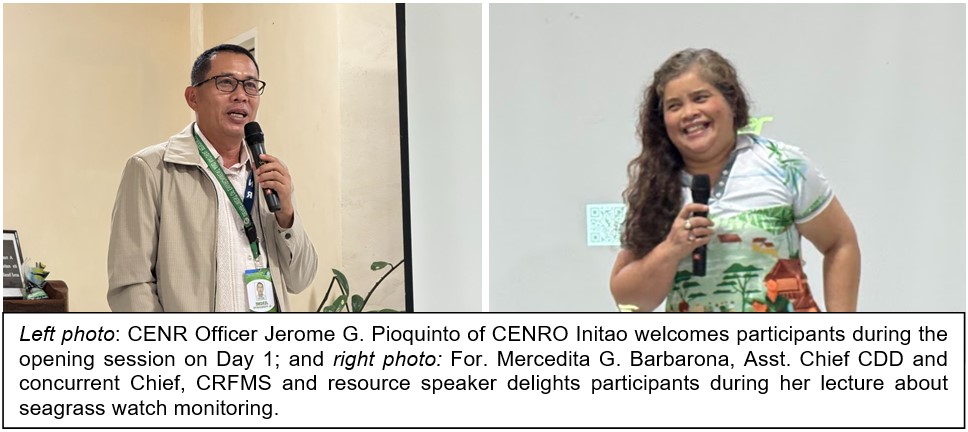
Subsequently, Assistant Chief of the Conservation and Development Division and concurrent Chief of CRFMS, Forester Mercedita G. Barbarona, presented the rationale of the activity. She highlighted the importance of World Seagrass Day and emphasized the need to strengthen monitoring capacities not only within the regional office but also among field personnel. She further explained the distinction between Seagrass Watch Monitoring and the Biodiversity Assessment and Monitoring System (BAMS), noting that the former adopts a citizen-science approach while the latter follows a policy-driven, science-based framework.
The discussions covered the importance of monitoring seagrass ecosystems, particularly in areas exposed to tourism and other anthropogenic activities. Participants were introduced to key monitoring parameters such as species composition, abundance, percent cover of seagrass and algae, and other environmental factors influencing seagrass health. Lectures also included seagrass taxonomy and morphology to aid in species identification during fieldwork.
The importance of mapping was likewise emphasized, with the use of available datasets from NAMRIA. A GIS-generated map prepared by Mr. Kim Peter Galve was presented, identifying three proposed monitoring sites. Participants were then grouped into three teams and provided with field guides to prepare them for the actual field demonstration.
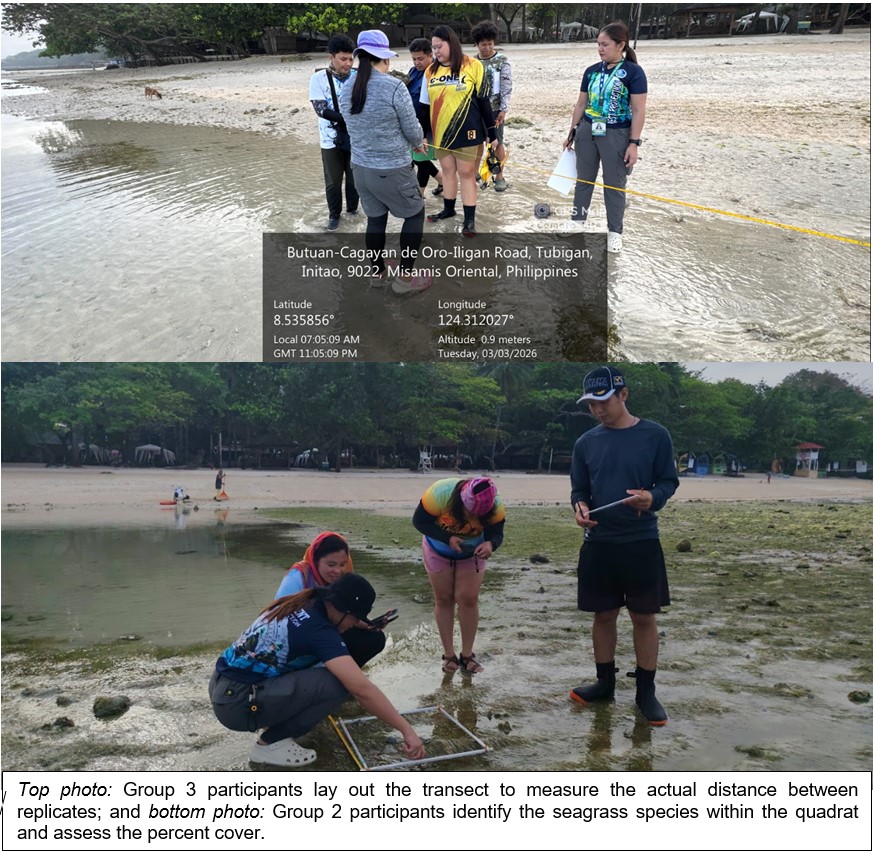
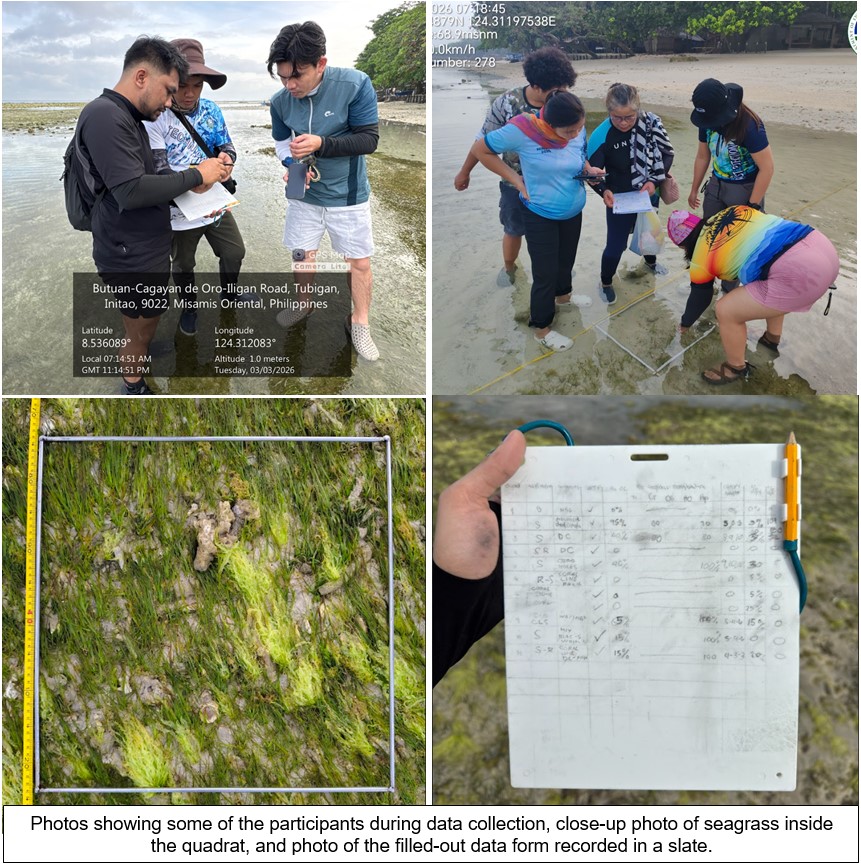
On the second day, participants proceeded to Brgy. Tubigan to conduct the field activity. Using the prepared GIS maps, each group navigated to designated monitoring sites. Due to time constraints, one site was selected for the actual demonstration. Participants applied standard monitoring procedures, including laying transects and quadrats, identifying seagrass species, estimating percent cover, and recording associated flora and fauna. The hands-on activity reinforced the concepts discussed during the lectures and emphasized accuracy and consistency in data collection.
Following the fieldwork, participants returned to the ILPLS Office for data consolidation and analysis. They computed seagrass percent cover, species composition, and abundance using the collected data. They were also guided in preparing maps reflecting the monitored areas and integrating field results for interpretation. The session highlighted the importance of proper data encoding, validation, and analysis in generating reliable information for long-term monitoring.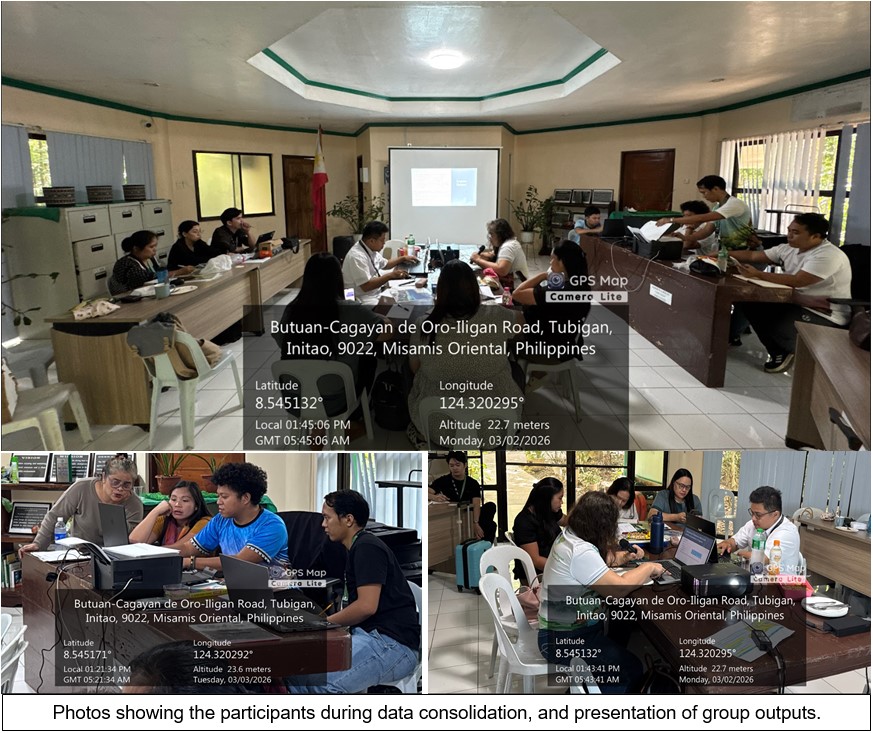
The activity concluded with a synthesis session, where each group presented their outputs and shared insights from the field experience. Participants expressed their commitment to applying the knowledge and skills gained to improve seagrass monitoring and conservation efforts in their respective areas.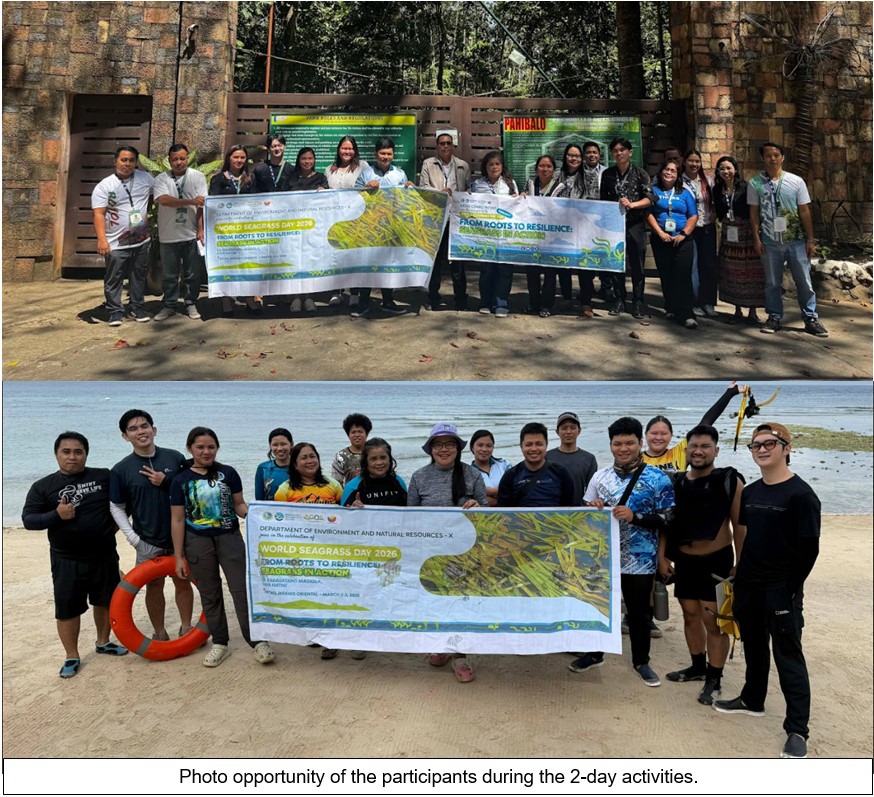
Overall, the activity successfully enhanced the technical capacity of participants in seagrass monitoring and reinforced the importance of science-based and community-supported approaches in managing coastal and marine ecosystems. It also underscored the value of baseline data and continuous monitoring in developing adaptive management strategies for the sustainable use and conservation of seagrass habitats.